DC's LGBTQ History
When the Founding Fathers established Washington, DC, as a federal territory in 1790, the fledgling government criminalized homosexuality as the British had. A desire for uniformity and a “normalcy” defined by American officials resulted in numerous repressions and segregations through ensuing centuries, targeting those who did not fit into a traditional family structure. The strictness of gender roles and gender identities in the United States, combined with a genuine fear of “divergent” sexual behaviors resulted in a myriad of negative interactions between the general public, the police state, and the emerging LGBTQ community.
As the seat of federal power, it is no surprise that Washington, DC, has been a major focal point in the fight for LGBTQ rights and resistance. From protests to lift the ban on gay and lesbian federal workers to those legalizing same-sex marriage, DC has a strong history of activism and community. According to the Williams Institute, DC is currently the gayest city in America with the most LGBTQ identifying individuals per capita. DC’s long-standing LGBTQ community deserves recognition for making the city a safe space.
This tour is a collection of sites located in the District that have been historically significant to the city’s LBGTQ community. Not every site is a designated landmark, yet each location is historically significant. Additionally, some sites are designated, but the official documentation does not include LGBTQ history.
Like other marginalized communities with histories of oppression, the LGBTQ community’s history is scattered and incomplete, and there are ongoing research efforts to continue adding sites to this digital collection. Due to the criminalization of homosexuality, many archival materials used to create historical accounts are missing (e.g., journals, photographs, and public records).
However, the DC Preservation League is committed to continuing its efforts to document the histories of communities currently underrepresented on the DC Inventory of Historic Sites. If you have information on a site you believe to be historically significant, please contact DCPL’s Community Outreach & Grants Manager, Zachary Burt (zach@dcpreservation.org).
For additional information related to this tour, please see the Historic Context Statement for Washington’s LGBTQ Resources, which can be found here: https://dcpreservation.org/wp-content/uploads/2023/06/Washington-LGBTQ-Historic-Context-Statement.pdf
Sites 13
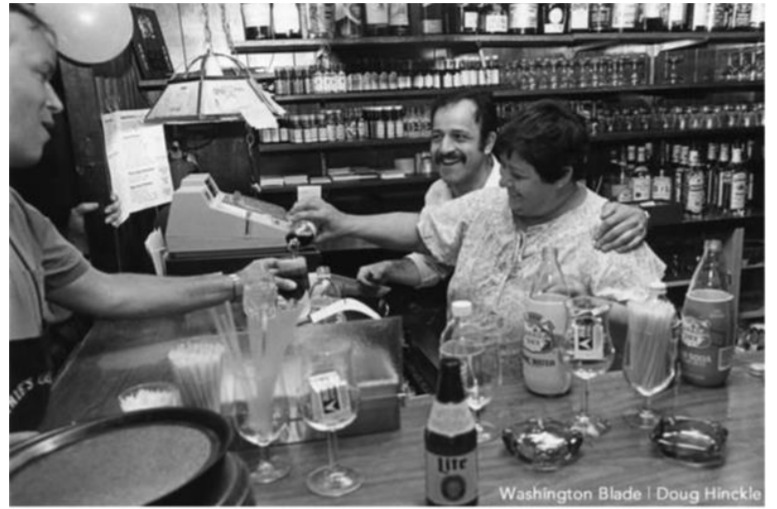
Annie's Paramount Steakhouse: Opened in 1948, Annie’s became an early communal space for the LGBTQ+ community in Washington, DC.
Initially opened as a “musty little beer joint” in the Dupont Circle neighborhood of Washington, DC, Paramount Steakhouse (later renamed Annie’s Paramount Steakhouse)) became a haven for the LGBTQ+…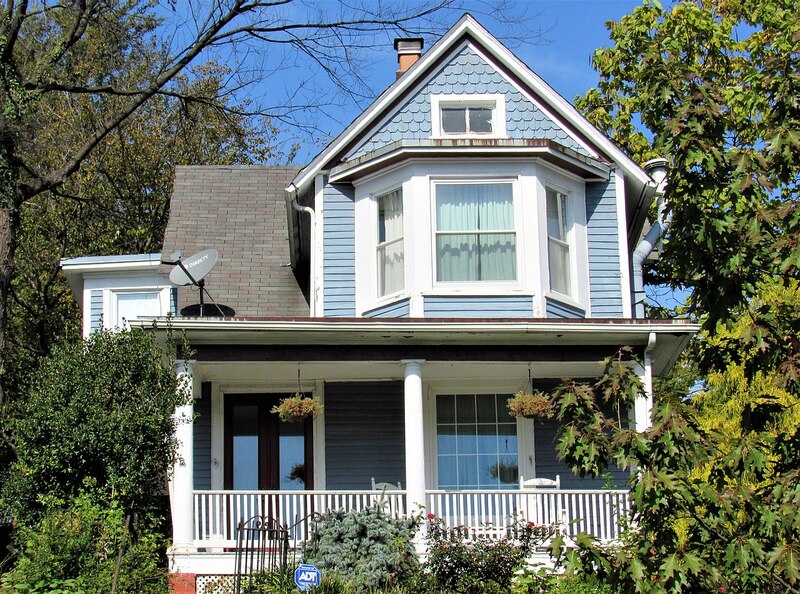
Lucy Diggs Slowe and Mary Burrill House: Lucy Diggs Slowe and Mary Powell Burrill lived here as a couple for 15 years.
This cross-gabled Queen Anne frame house at 1256 Kearny Street NE was built for prosperous Irish immigrants James T. and Hannah Ward. The house was probably completed in 1893, and the couple remained…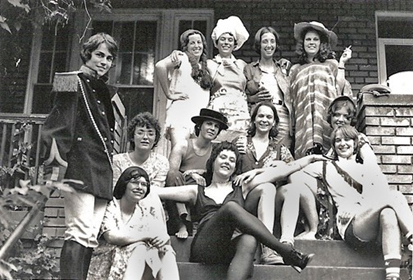
The Furies Collective: This landmark is directly connected with the early expression and definition of the character, role, and ideology of the lesbian community in DC.
The row house at 219 11th Street SE, historically home to the Furies Collective, is a two-story, early 20th-century brick dwelling located in the Capitol Hill Historic District. Built in 1913, the…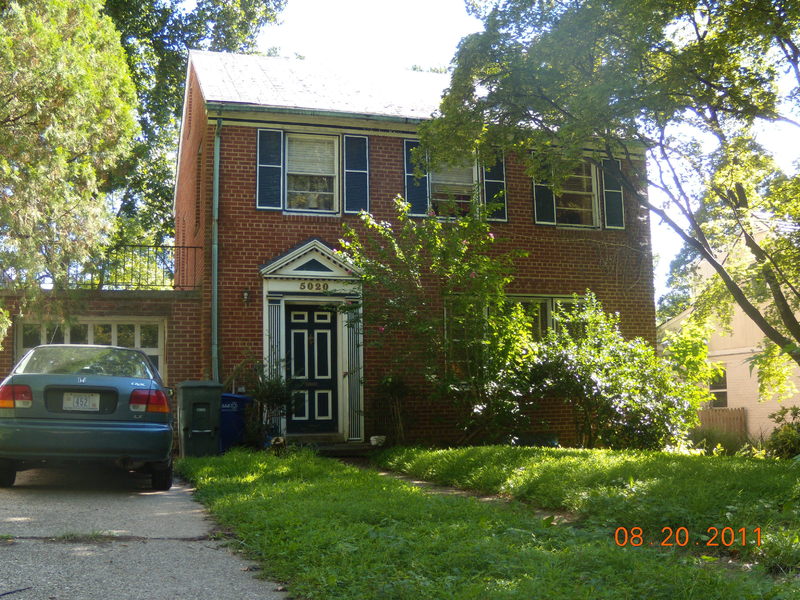
Franklin Kameny Residence: This site recognizes the historic significance of gay rights activist Dr. Franklin E. Kameny.
Beginning in 1962 and continuing for nearly 40 years, this ordinary brick Colonial Revival house served as the home and office of Dr. Franklin E. Kameny, one of the leading lights of the gay rights…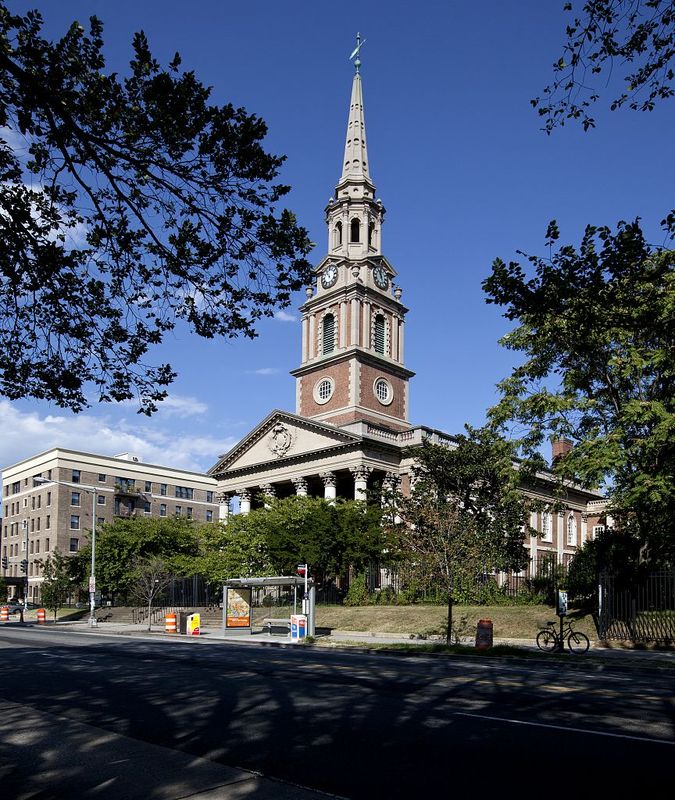
All Souls Unitarian Church: The All Souls Unitarian congregation dedicated its third and current church at Sixteenth and Harvard Streets NW in 1924.
In 1821, the congregation of All Souls Unitarian Church first organized as the First Unitarian Church. The original edifice stood at Sixth and D Streets NW; however, in 1877, the congregation erected…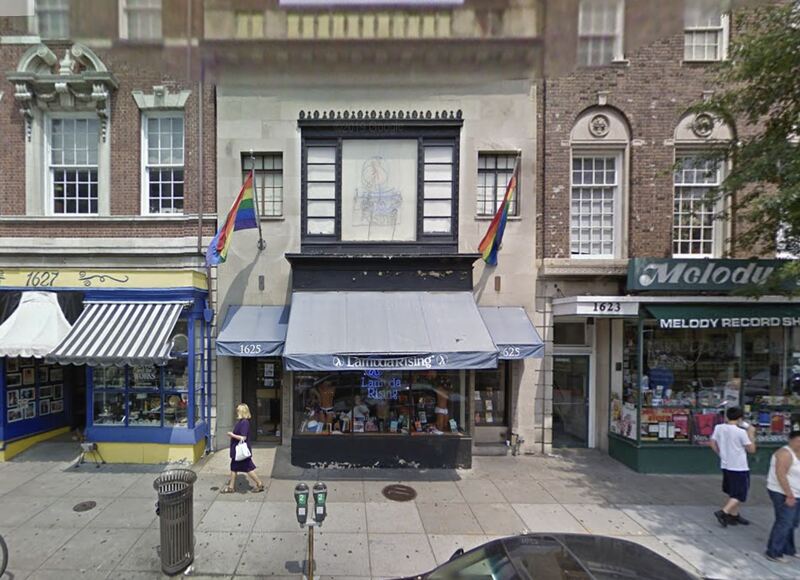
DC's LGBTQ History: Lamda Rising: This storefront north of Dupont Circle became a major LGBTQ+ bookseller prior to its closure in 2009.
Deacon Maccubbin opened Lamda Rising bookstore in 1974 in a 300-square-foot space on 19th Street NW. The bookstore opened at a significant time for the LGBTQ+ movement, as only one year prior to the…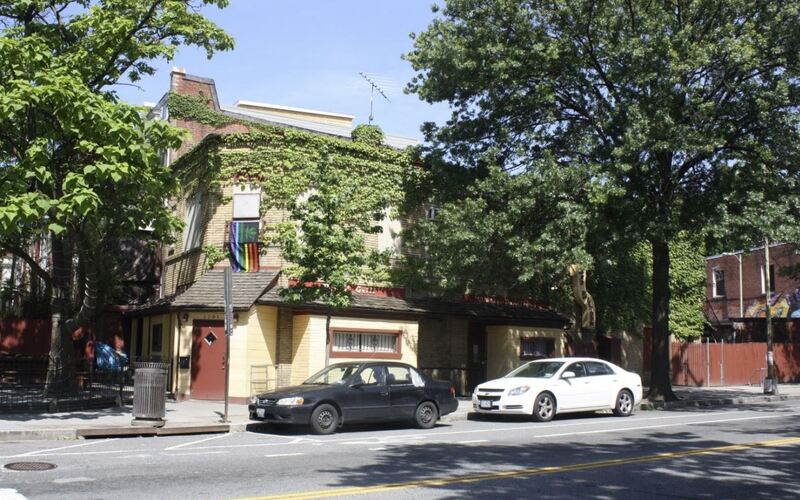
DC's LGBTQ History: Nob Hill: This corner spot in Columbia Heights was a popular African American gay bar for almost five decades.
This corner spot in Columbia Heights was once the site of Nob Hill, a popular African American gay bar. Nob Hill operated from 1957 to 2004, and, according to the Historic American Buildings Survey…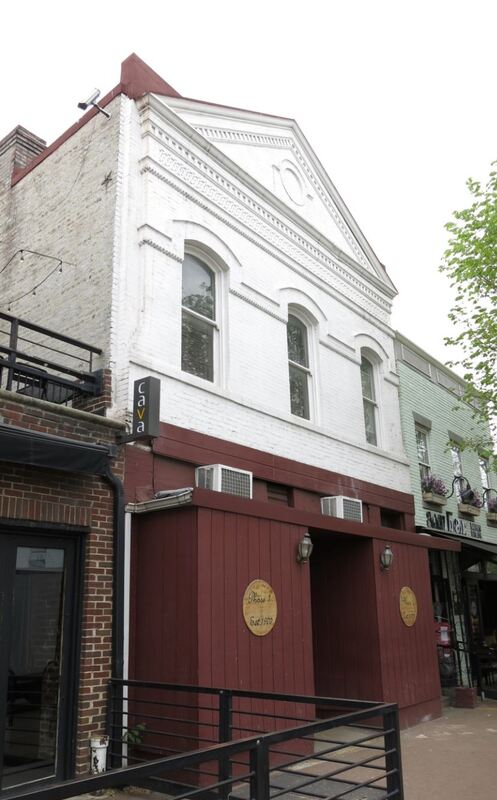
DC’s LGBTQ History: Phase One: Prior to it's closure, Phase One was one of the nation's oldest lesbian bars.
Phase One was a popular lesbian bar on DC's Barracks Row (8th Street SE), which was once referred to as "Gay Way," thanks to its many LGBTQ+ friendly businesses. Allen Carroll and his partner Chris…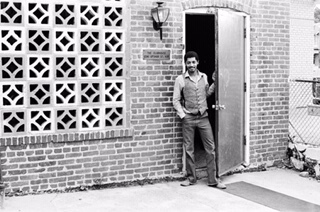
Civil Rights Site: Civic and Social Life - The Clubhouse: 1296 Upshur Street NW As AIDS became an epidemic in the early 1980s, the ClubHouse became a center for activism by LGBTQ racial minorities.
The ClubHouse (also known as the Clubhouse and the Club House), constructed in phases between 1930 and 1945, served as an automobile garage and showroom before becoming DC’s top African American dance…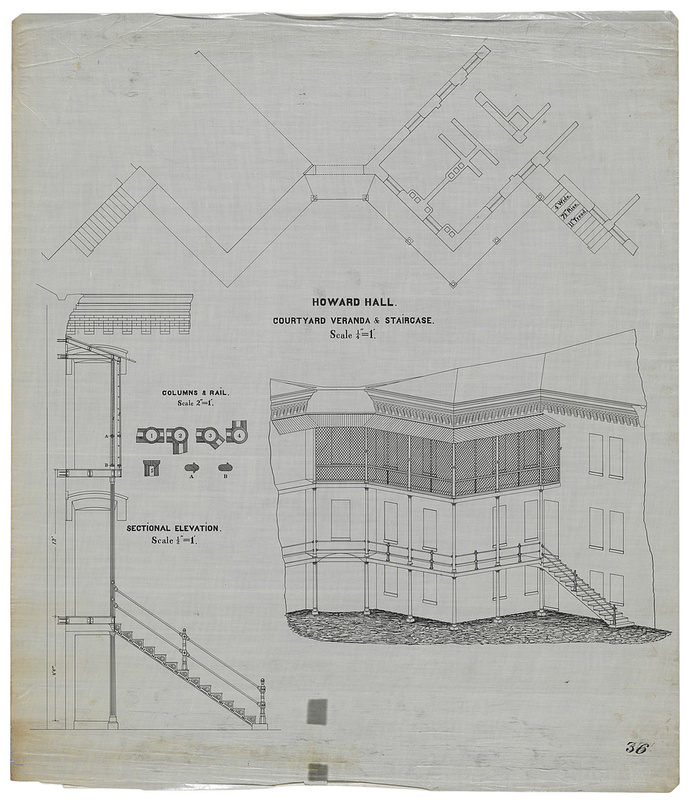
DC's LGBTQ History: Howard Hall at Saint Elizabeths Hospital: When homosexuality was considered a crime, this hospital dealt horrible treatments to those convicted.
In 1852, Congress chartered Saint Elizabeths Hospital as the Government Hospital for the Insane, with a mission of providing “the most humane care and enlightened curative treatment” for patients from…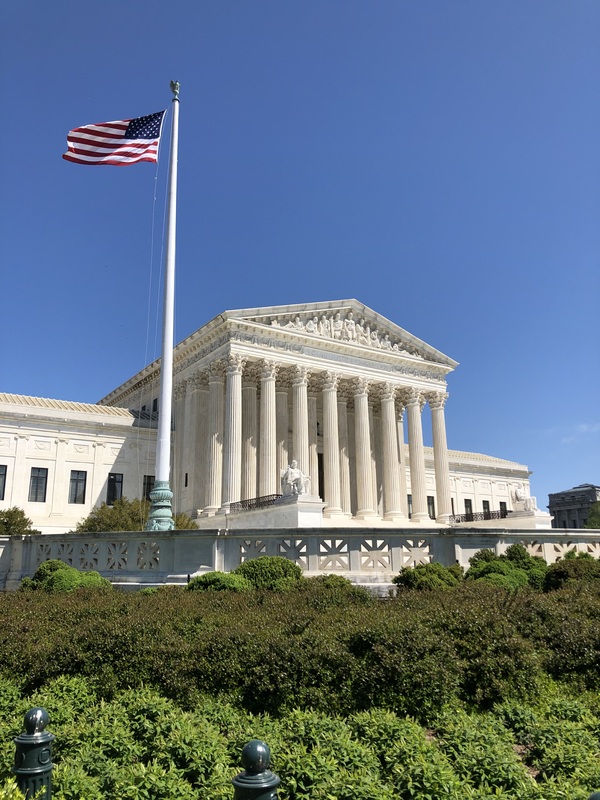
DC's LGBTQ History: US Supreme Court: Some substantial victories, as well as setbacks, for the LGBTQ+ movement have taken place at the nation's highest court.
As the most influential court in the United States, Americans have long understood the importance of the US Supreme Court and many view it as a final avenue to right a legal wrong. LGBTQ+ Americans,…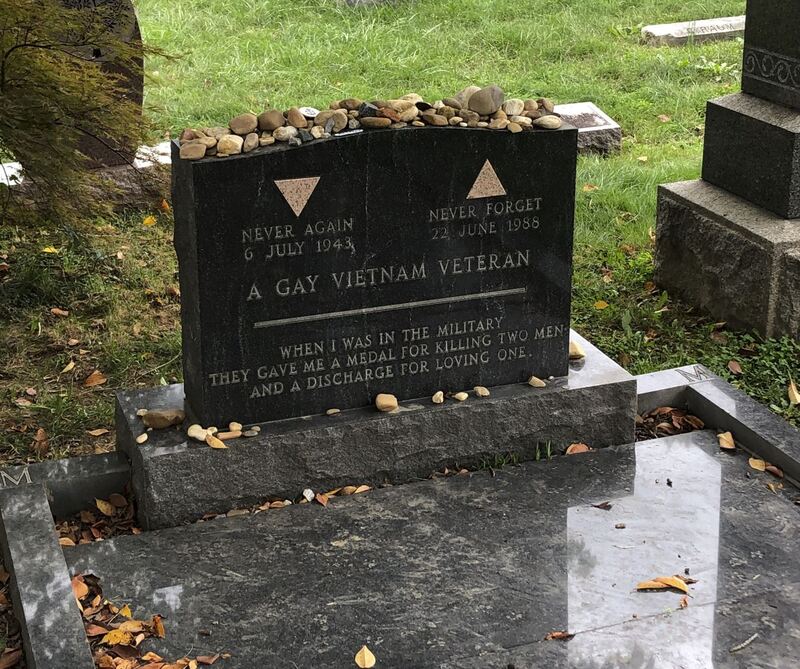
Congressional Cemetery Historic District: This graveyard is among the most notable resting places for early American historical figures and has since become important to the LGBTQ+ community.
The original four and one-half acre tract of Congressional Cemetery was purchased from the Government for $200 on April 4, 1807 as a private burial ground. On March 30, 1812, several years after…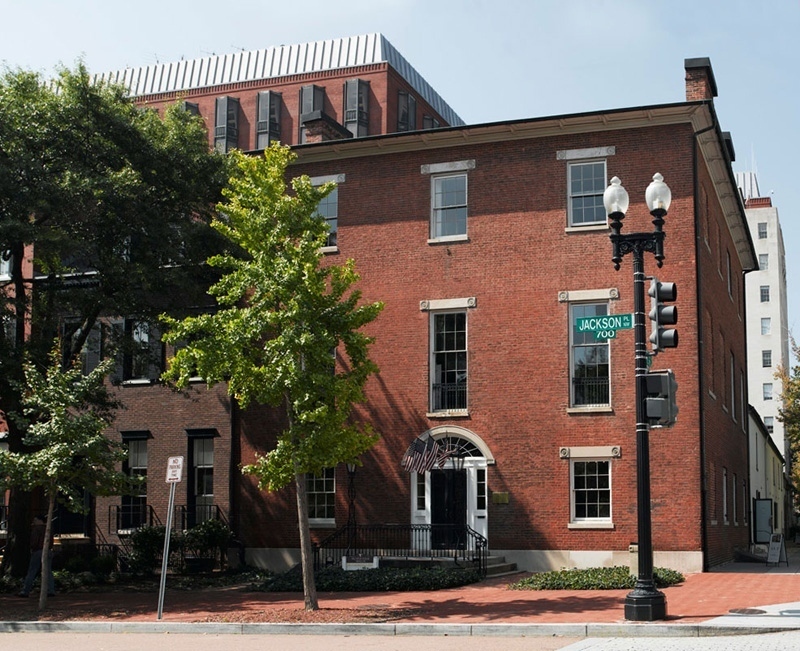
Lafayette Square Historic District: Across from the White House, this park has hosted many prominent public demonstrations and has served as a site of national symbolic importance.
Lafayette Square is the formal public park opposite the White House, and with its surrounding frame of buildings constitutes the Lafayette Square Historic District. The Historic District includes…Tour curated by: DC Preservation League | For additional information related to this tour, please see the Historic Context Statement for Washington’s LGBTQ Resources, which can be found here: https://dcpreservation.org/wp-content/uploads/2023/06/Washington-LGBTQ-Historic-Context-Statement.pdf